D.LIVE / Mitsubishi Electric HALLE: Precisely Measuring and Managing Visitor Numbers and Visitor Experience for the First Time
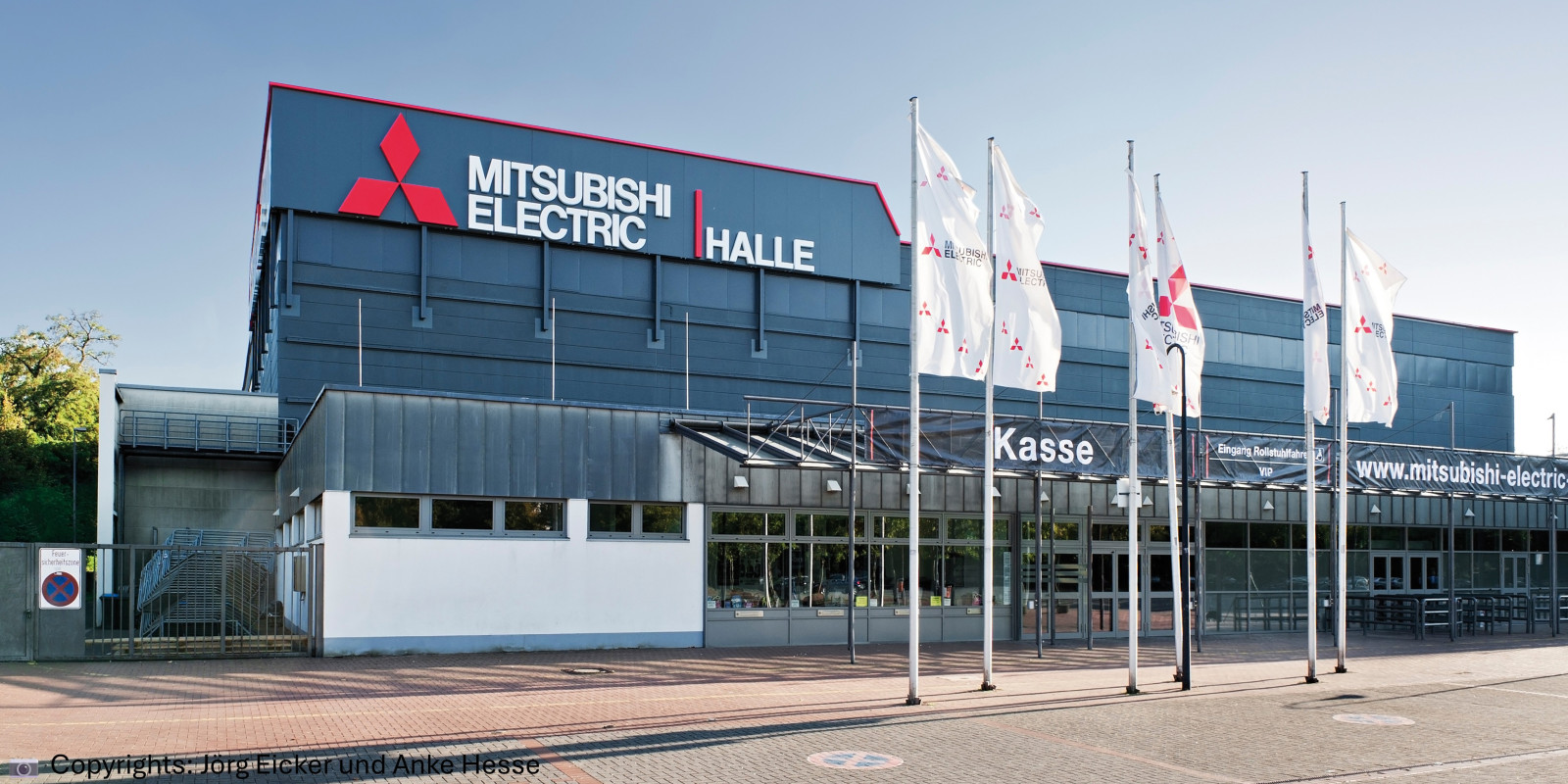
The Mitsubishi Electric HALLE is one of Düsseldorf's key event venues and part of the D.LIVE portfolio.
Like many established venues, Mitsubishi Electric HALLE faces a common operational challenge:
Visitor flows are visible, but not systematically measurable.
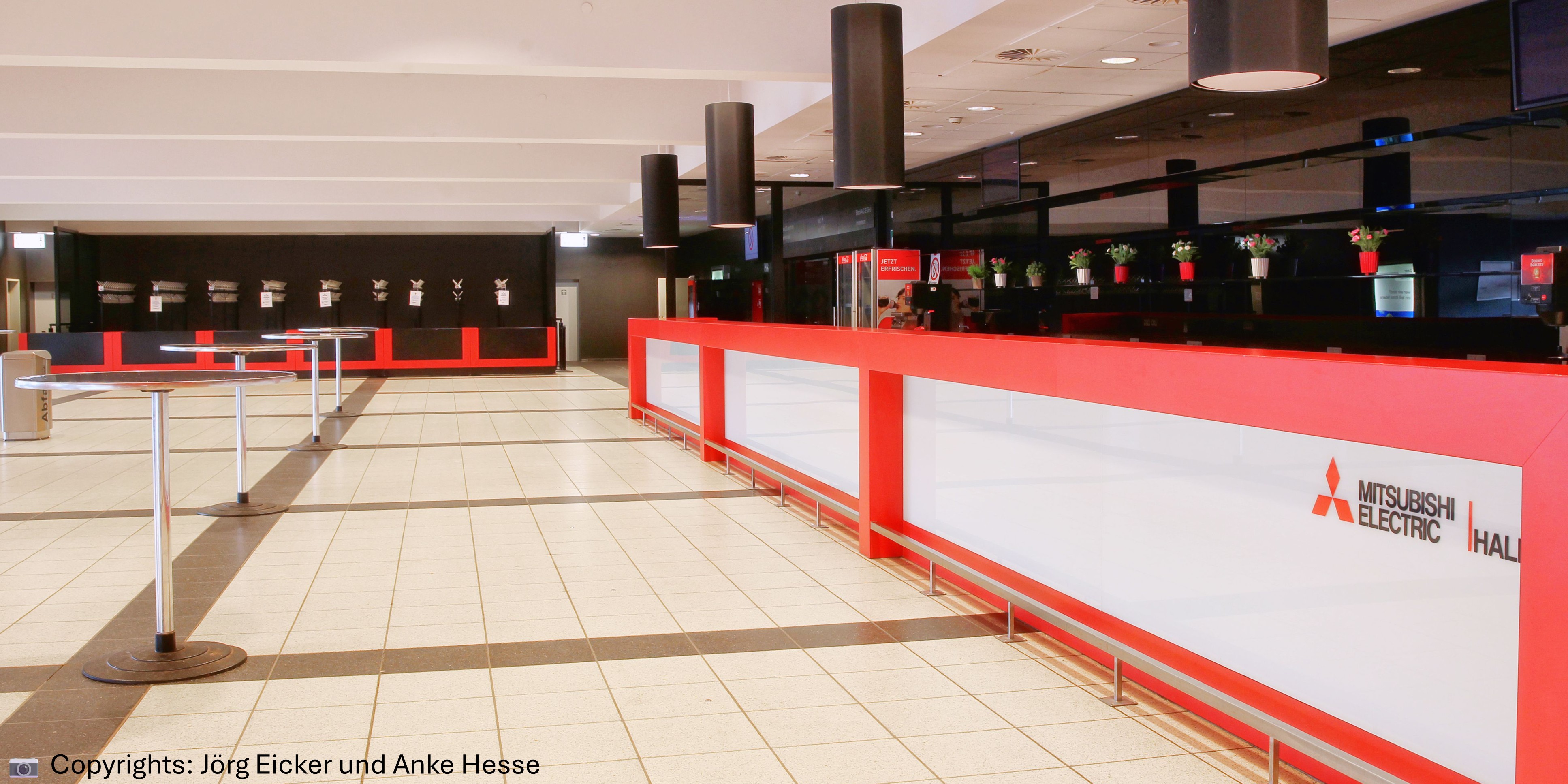
Particularly in central areas such as entrances and foyers, dynamic situations arise that are crucial to operations, safety, and the overall visitor experience:
How many visitors actually enter the venue – and when?
How are visitors distributed throughout the foyer before and during an event?
Where do bottlenecks or waiting times occur?
What relationships exist between waiting times, catering revenue, and staffing levels?
In day-to-day operations, these questions can often only be answered through experience and occasional observations. A systematic, data-driven foundation for decision-making is missing.
Technical Solutions
To close this information gap, D.LIVE has decided to equip the entrance area and foyer of Mitsubishi Electric HALLE with an AI-powered video analytics solution from CALA.
The focus is not on isolated measurements, but on building an integrated system for analyzing visitor flows and movement patterns.
Visitor Counting at the Entrance
A sensor-based system is being implemented at the entrance to accurately capture visitor flows.
Key features include:
Real-time counting of incoming and outgoing visitors
Measurement of visitor throughput and peak periods
Analysis of visitor numbers to provide reliable insights into occupancy levels
Particular attention is paid to the optimal positioning and alignment of the sensors to ensure reliable detection of movement directions and visitor flows.
Analysis of Dwell Times and Movement Patterns in the Foyer
The foyer serves as the central hub for visitor flows within the venue and therefore forms the starting point for Customer Journey Analytics.
The initial focus includes:
Tracking dwell times and movement patterns
Analyzing occupancy levels in defined areas and Points of Interest (PoIs)
Identifying high-traffic areas and preferred visitor routes
Analyzing relationships between waiting times, catering revenue, and staff deployment
Due to the spatial characteristics of the venue, sensors and cameras are combined to ensure the highest possible data quality.
For specific applications – such as the aggregated analysis of demographic characteristics or crowd monitoring – dedicated top-down sensors are used to deliver accurate results even in high-density situations.
Systematic Zone Definition
A key component of the setup is the clear structuring of monitored areas.
This includes:
Defining entrance and transition zones
Connecting entrance and foyer analytics
Creating a comprehensive overview of visitor movements
In addition, the integration of existing systems – such as installed cameras or available data sources – is being evaluated to provide a more complete picture of visitor flows and movement paths.
Additional insights can be gained from third-party data sources, including weather and traffic information.
Technological Optimization During Operations
The project also serves as a reference for identifying the optimal combination of different technologies.
Key priorities include:
Combining camera-based and sensor-based solutions
Adapting technology to spatial conditions such as ceiling heights, sightlines, and visitor density
Continuously validating data quality during live operations
Benefits for Venue Operations
The project offers tangible, immediately applicable benefits for the operation of Mitsubishi Electric HALLE.
Greater Safety Through Transparency
Continuous monitoring and analysis will provide valuable insights into how visitor flows behave, particularly during critical situations.
This enables:
Early detection of potential bottlenecks and anomalies
Well-informed assessment of risk situations
Data-driven decision-making for safety and security strategies
More Efficient Venue Operations
Visitor Journey Analytics provides a detailed understanding of how spaces are used and how staff can be deployed most effectively.
Key questions include:
When do peak traffic periods occur?
Which areas experience the highest visitor traffic, and at what times?
How do visitor flows change over time?
These insights support targeted planning of:
Staffing and personnel deployment
Visitor routing and wayfinding
Entrance management and visitor guidance
Capacity management
Coordination with authorities and operational partners
Technological Development
By deploying and comparing different technologies in parallel, the project generates additional insights that can inform future planning.
Key questions being explored include:
Which systems deliver the highest data quality under real-world conditions?
How can installation requirements be minimized?
Which solutions offer long-term scalability?
Conclusion
From a Traditional Event Venue to a Smart Venue.
With the current setup, Mitsubishi Electric HALLE is evolving into an increasingly data-driven event venue.
The combination of precise visitor counting at the entrance and detailed foyer analytics creates a new level of transparency.
Once the systems are fully integrated into live operations, D.LIVE will have a modern technological foundation for capturing and analyzing visitor flows at Mitsubishi Electric HALLE.
This represents more than just technological progress. It establishes a new foundation for informed operational decisions, enhanced safety, and an optimized visitor experience.